
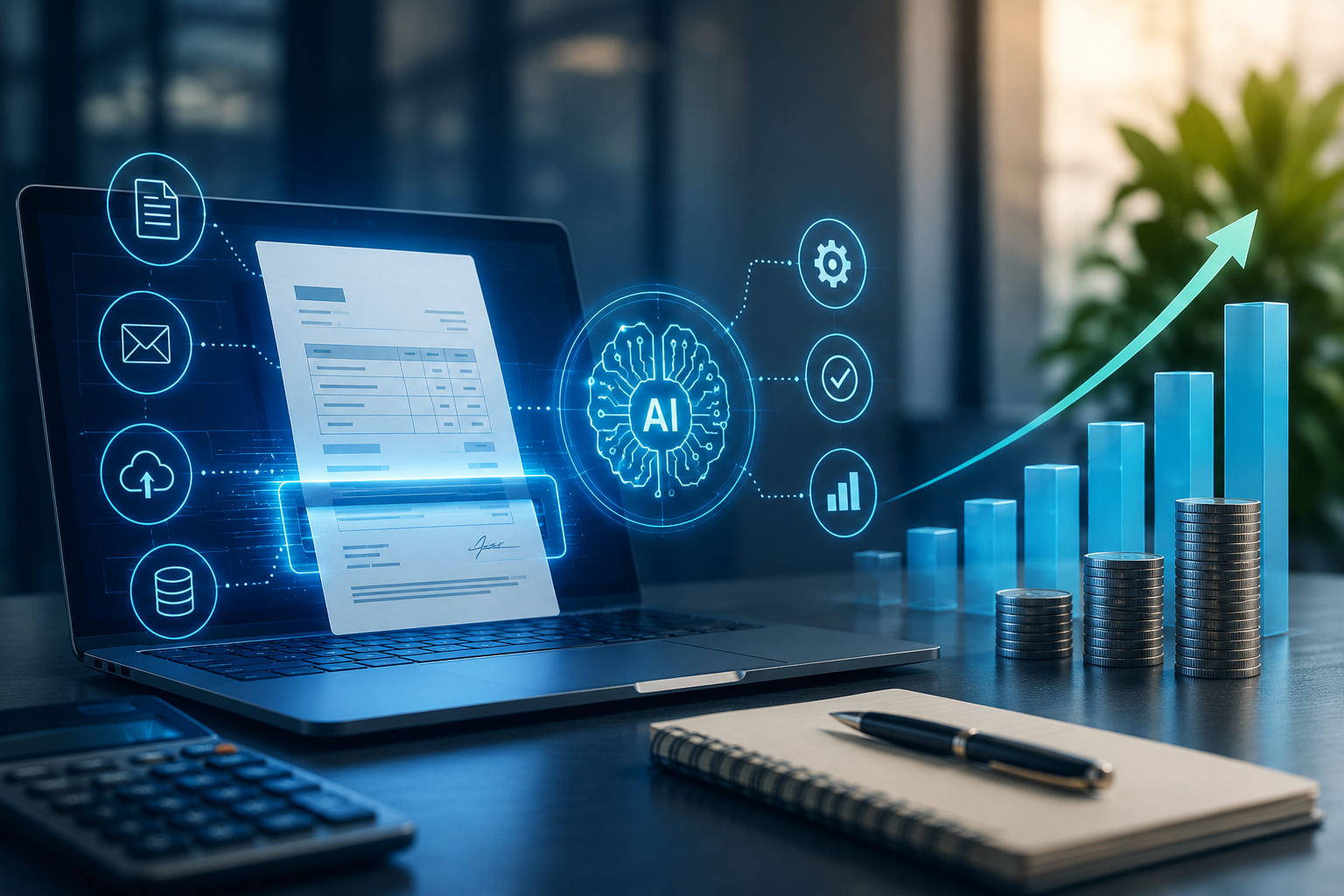
How AI Invoice Automation Improves Cash Flow and Revenue Management
Cash flow is the heartbeat of every business. Sales may look good on paper, but if invoices go out late, approvals drag, or customers forget payment deadlines, the money does not arrive when it should. That gap between earning revenue and collecting it can create pressure on salaries, stock purchases, supplier payments, rent, expansion plans, and daily operations.
This is why AI Invoice Automation is becoming a powerful tool for businesses in 2026. It does more than create invoices quickly. It helps businesses manage the entire journey from invoice creation to payment collection, giving finance teams better control over income visibility and revenue planning.
For growing companies, the challenge is not only sending invoices. It is knowing which invoices are pending, which customers pay slowly, which payments need follow-up, and how expected income affects future decisions. This is where Revenue Cycle Management and Cash Flow Optimization become closely connected.
The workflow approach behind Flowgen Vision Technologies supports this shift toward smarter finance operations, where billing becomes faster, cleaner, and easier to monitor without adding more manual work.
Why Cash Flow Problems Often Start with Invoicing
Many businesses assume cash flow problems begin when customers refuse to pay. In reality, delays often start much earlier.
A late invoice, missing purchase detail, incorrect tax field, unclear service description, or slow internal approval can push payment back by days or weeks. Even when customers are willing to pay, an unclear invoice may sit untouched until someone asks for correction.
Common invoicing problems include:
- Invoices created too late
- Wrong customer details
- Missing payment terms
- Unclear product or service descriptions
- Duplicate invoice numbers
- Poor follow-up tracking
- Scattered billing records
- Manual approval delays
These issues quietly weaken cash flow. AI Invoice Automation helps businesses reduce these problems before they affect collections.
What AI Invoice Automation Means
AI Invoice Automation uses intelligent systems to create, check, send, monitor, and organize invoices with minimal manual input.
Instead of preparing every invoice from scratch, the system can pull customer records, product or service details, pricing rules, payment terms, tax settings, and invoice templates automatically.
A smart system can also flag missing information, detect unusual totals, identify duplicate entries, and help track unpaid invoices.
This creates a more reliable billing process and supports better Revenue Cycle Management from the moment a sale is recorded.
How Invoice Automation Improves Cash Flow
Cash flow improves when invoices move quickly and accurately.
If a business completes a service today but sends the invoice five days later, the payment cycle has already been delayed. If the customer asks for corrections, the delay grows longer.
With automation, invoices can be generated immediately after a sale, delivery, service completion, or approval milestone. Faster invoice delivery gives customers more time to process payment and gives the business better visibility into expected income.
This is one of the simplest ways AI Invoice Automation supports Cash Flow Optimization. It reduces waiting time at the beginning of the payment cycle.
A smart first step is to review how long it currently takes your team to create and send invoices after work is completed. That number often reveals where cash flow is being slowed down.
- Faster Approvals Reduce Revenue Bottlenecks
Invoice approvals can become a hidden bottleneck. In many businesses, invoices must pass through sales teams, managers, finance officers, or project leads before reaching the customer.
Manual approval flows often depend on emails, calls, or messaging apps. This creates delays, especially when someone is unavailable.
AI-powered systems can help by routing invoices to the right person, flagging exceptions, and keeping approval records organized. Standard invoices can move quickly, while unusual invoices can receive extra attention.
This improves Revenue Cycle Management because income-related documents no longer get stuck in unclear approval chains.
- Fewer Errors Mean Faster Payments
Customers rarely rush to pay invoices that contain mistakes.
If the amount is wrong, customer name is misspelled, payment terms are unclear, or required invoice details are missing, the customer may pause payment until the issue is resolved.
AI helps reduce these errors by checking invoice information before it is finalized.
It can identify:
- Missing fields
- Duplicate invoices
- Unusual amounts
- Incorrect customer records
- Inconsistent payment terms
- Mismatched product or service details
Cleaner invoices create fewer disputes, which supports Cash Flow Optimization and reduces the workload for finance teams.
Better Payment Tracking
Sending invoices is only half the job. Businesses also need to know what happens after invoices are sent.
Manual tracking can quickly become messy. One invoice may be in an email thread. Another may be saved in a spreadsheet. A third may be waiting for a customer response.
AI Invoice Automation gives businesses a clearer view of invoice status. Teams can see which invoices are sent, approved, overdue, partially paid, or settled.
This visibility makes payment follow-up more organized. Instead of guessing which customer to contact, finance teams can prioritize based on due dates, amounts, and payment history.
If unpaid invoices are currently tracked manually, shifting them into one organized dashboard can immediately improve collection discipline.
AI Helps Reduce Overdue Payments
Overdue payments often happen because follow-up is inconsistent.
A finance officer may forget to send a reminder. A customer may miss the due date. A manager may not know which payments are late until the month-end review.
AI can help by sending reminders, highlighting overdue accounts, and identifying payment patterns. For example, if a customer regularly pays late, the system can help teams plan earlier follow-ups.
This makes collection more proactive.
Instead of reacting when cash flow becomes tight, businesses can act before payment delays become serious.
- Stronger Revenue Cycle Management
Revenue Cycle Management refers to the full process of turning sales into collected revenue. It includes billing, approvals, payment tracking, collections, reporting, and reconciliation.
When this cycle is slow or unclear, businesses struggle to forecast income accurately.
AI helps improve the revenue cycle by connecting key steps:
- Invoice creation
- Approval routing
- Invoice delivery
- Payment reminders
- Status tracking
- Revenue reporting
- Customer payment insights
This creates a smoother flow from sale to collection.
A stronger revenue cycle helps business owners understand not only how much revenue was earned, but how much has actually been collected and how much is still pending.
Better Forecasting and Planning
A business cannot make strong financial decisions without reliable cash flow visibility.
If invoice records are scattered, forecasting becomes guesswork. Owners may not know how much money is expected next week, which customers are delaying payment, or which services are generating reliable revenue.
With automated invoicing, businesses can generate reports that show:
- Outstanding invoices
- Expected collections
- Customer payment trends
- Monthly revenue patterns
- Overdue balances
- Paid versus unpaid invoices
These insights make Cash Flow Optimization more practical. Instead of waiting for problems to appear, businesses can plan ahead with better data.
- Compliance-Ready Digital Records
Modern billing is becoming more structured. Official electronic invoicing guidance emphasizes certified invoice systems, clear invoice components, and organized digital records for eligible registered businesses.
This means invoice management should not be treated casually. Businesses need systems that store records properly, maintain consistency, and support easy retrieval when documents are needed.
AI Invoice Automation helps by keeping invoices organized, searchable, and more standardized. It does not replace professional tax review, but it can make daily billing records cleaner and easier to manage.
Customer Experience Improves Too
Good billing improves customer relationships.
When invoices are clear, accurate, and delivered on time, customers can process payments with less friction. They do not need to ask repeated questions or wait for corrected documents.
Professional invoices also improve trust. They show that a business is organized and serious about service delivery.
This customer-facing benefit often gets overlooked, but it plays a major role in faster payments and smoother long-term relationships.
Why Growing Businesses Need Automation Early
Many businesses wait too long before upgrading their billing process. They only take action when invoice volume becomes difficult to manage.
The better approach is to automate before billing becomes stressful.
If a business already handles recurring customers, multiple services, tax fields, payment terms, or overdue accounts, automation can create immediate value.
The system thinking reflected through Flowgen Vision Technologies focuses on helping businesses simplify the finance tasks that quietly drain time, especially when growth starts increasing invoice complexity.
Final Thoughts
Cash flow problems are not always caused by poor sales. Sometimes they come from slow invoicing, unclear approvals, weak follow-up, and disorganized records.
AI Invoice Automation helps solve these issues by making billing faster, more accurate, and easier to track. It supports Revenue Cycle Management by connecting invoice creation, approvals, payment monitoring, and reporting into a cleaner workflow.
For businesses focused on Cash Flow Optimization, automation is no longer just a technical upgrade. It is a smarter way to protect income, reduce delays, and plan with confidence.
When invoices move faster, payments follow more smoothly. When records are organized, revenue becomes easier to manage. That is the real value of using AI in modern billing.
Frequently Asked Questions
-
How does invoice automation improve cash flow?
Invoice automation improves cash flow by generating invoices faster, reducing errors, sending reminders, tracking payments, and helping businesses collect money sooner with better visibility. -
Can AI speed up invoice approvals?
Yes. AI can speed up invoice approvals by routing invoices automatically, flagging exceptions, reducing manual checks, and keeping approval workflows organized and easier to monitor. -
What is invoice-to-cash automation?
Invoice-to-cash automation manages the full process from invoice creation to payment collection, including approvals, delivery, reminders, tracking, reporting, and reconciliation. -
How does AI help revenue management?
AI helps revenue management by organizing invoice data, tracking unpaid balances, identifying payment patterns, improving forecasting, reducing delays, and giving clearer insight into expected income. -
Does AI reduce overdue payments?
Yes. AI reduces overdue payments by sending timely reminders, tracking due dates, highlighting late accounts, identifying slow-paying customers, and helping teams follow up earlier.